Home Settled Truths Five Pillars Blog Podcast Academy AlignIQ Founder Take the Test

A B-Corporation · Franklin, Tennessee

The Voice of
Character and
Authenticity
in a World That
Has Lost Both.

Every institution that touches human life — education, enterprise, religion, entertainment, family — is only as strong as the character of the people inside it. The Compass Institute exists to form those people.

Explore Our Mission Take the Test
What We Are
Certified B-Corporation

A formation
organization, not a
consulting firm.

The Compass Institute for Enterprise Formation and Authentic Leadership is a B-Corporation — legally structured to pursue mission alongside margin, accountable to people and purpose as well as profit.

We are not a think tank that produces reports. We are not a consultancy that bills hours. We build programs, pipelines, and platforms that form people — and we fund that work through enterprise models that align with the mission rather than compromise it.

  • Every institution is only as strong as the character of the people inside it
  • Character cannot be transferred through information — it must be formed through experience, accountability, and truth
  • The formation deficit is the root cause of the leadership crisis, the mental health crisis, the trust crisis, and the institutional collapse we see everywhere
  • Formation is not a religious program — it is a human necessity that every wisdom tradition has recognized
  • Enterprise built on authentic character is more durable, more profitable, and more human than enterprise built on performance alone
  • Government dependency corrupts mission — we fund our work through enterprise, not bureaucracy
The Foundation

The Three Forces That Drive
Every Human Being

Beneath personality, culture, trauma, and temperament, every person on earth runs on the same three fundamental forces. They are not preferences or tendencies — they are the engine of human motivation. Every wisdom tradition in history has named them. Every civilization has been shaped by whether its people governed them or were governed by them. Compass formation begins here — with an honest diagnosis — because the Sixteen Settled Truths are the governance architecture for these three forces. You cannot understand the cure without first seeing what it cures.

Appetite
The Drive for Pleasure, Comfort, and Consumption

The engine of embodied life — the desire for physical satisfaction, material comfort, and sensory pleasure. In its governed form, Appetite produces health, enjoyment, and stewardship of the body. Ungoverned, it produces excess, addiction, and the reduction of everything — including people — to objects of consumption.

Ungoverned: Excess · Addiction · Consumption
Approval
The Drive for Belonging, Recognition, and Status

The engine of social life — the desire to be seen, valued, and affirmed by others. In its governed form, Approval produces genuine community, honest relationship, and the motivation to contribute meaningfully. Ungoverned, it produces performance, tribalism, and an identity that collapses the moment the crowd looks away.

Ungoverned: Performance · Tribalism · Fragile Identity
Ambition
The Drive for Achievement, Significance, and Power

The engine of enterprise — the desire to accomplish, to matter, to build things that outlast the builder. In its governed form, Ambition produces meaningful work, servant leadership, and lasting value. Ungoverned, it produces domination, the exploitation of others, and the sacrifice of everything real on the altar of the impressive.

Ungoverned: Domination · Exploitation · Hollow Achievement

These three drivers are not a new discovery. They appear in Genesis 3, in the Egyptian Maxims of Ptahhotep (2375 BCE), in Plato's Republic, in the Buddhist Three Poisons, in the Desert Fathers' logismoi, in Freud's id/ego/superego, in Maslow's hierarchy, and in the neuroscience of the dopamine reward system. Four thousand years of independent observation across every civilization points to the same three forces. The Sixteen Settled Truths exist to govern them.

The Foundation

The Universal
Settled Truths

Beneath every enduring civilization, every lasting enterprise, every wisdom tradition across human history, there are non-negotiable realities about human nature. These are not religious dogma. They are the truths that every tradition — Christian, Jewish, Muslim, Buddhist, Stoic — has independently arrived at because they are written into the nature of things.

Compass formation is built on these truths. Not on therapy. Not on personality frameworks. Not on trending leadership methodologies. On what has always been true about what it means to be human.

Click any truth to go deeper.

01
Humility
Accurate self-assessment. Freedom from the need to be more than you are.
+

Humility is not self-deprecation. It is not thinking less of yourself — it is thinking of yourself less. The humble person sees themselves clearly: neither inflated by pride nor deflated by shame. They know their strengths without needing to broadcast them and acknowledge their limits without being destroyed by them.

Every wisdom tradition places humility at the foundation because everything else depends on it. The person who cannot accurately see themselves cannot accurately see anything else. Pride distorts perception. Humility restores it.

02
Acknowledgment of a Greater Power
Life is not organized around you. You are not the center of the universe.
+

This truth does not require a specific theological commitment. It requires something more fundamental: the recognition that the world did not begin with you, does not revolve around you, and will not end when you do. You are not the measure of all things.

The person who places themselves at the center of the universe lives in a world that is perpetually failing to meet their expectations — because the universe was not designed around their preferences. Acknowledging a greater power is the beginning of peace. It is the surrender of a throne no human being was ever meant to occupy.

Every tradition names this differently — God, the Tao, dharma, nature, the cosmos — but every tradition agrees: the person who lives as though they are the organizing principle of reality lives badly, leads badly, and ultimately collapses under the weight of a role they were never built to carry.

03
Love
Choosing the good of another without requiring reciprocity.
+

Love in the formation sense is not sentiment. It is not a feeling that arrives and departs according to circumstance. It is a choice — the daily, costly decision to orient your actions toward the flourishing of another person regardless of what you receive in return.

This is the truth that makes families hold together under pressure, that makes leaders worth following, that makes institutions trustworthy. Everywhere love is absent, exploitation fills the vacuum. Everywhere it is present, something genuinely human becomes possible.

04
The Golden Rule
Treat others as you wish to be treated. The universal ethic.
+

No principle in human history has appeared more universally across more cultures, traditions, and centuries than this one. Confucius articulated it. Jesus named it. Muhammad taught it. The Stoics reasoned their way to it. Buddhism arrived at it independently. It is not a Christian rule or a Western rule. It is a human rule — discovered everywhere because it is written into the nature of things.

The Golden Rule is the minimal ethical floor beneath every civilization. Where it holds, communities become possible. Where it collapses, only power remains.

05
Truth
Reality exists independent of preference. Honest engagement with what is.
+

Truth is not what we prefer to be true. It is not what is useful or convenient or comfortable. It is what is actually the case — independent of our wishes, fears, or ideologies. The person formed in truth has developed the rare capacity to see what is rather than what they want to see.

This is the formation discipline that makes all others possible. You cannot fix what you will not see. You cannot build on what is false. Every lasting enterprise, every enduring relationship, every life of integrity is built on the willingness to engage honestly with reality as it actually is.

06
Knowledge
The disciplined pursuit of understanding. Wisdom begins with learning.
+

Knowledge is not information accumulation. It is the disciplined, humble pursuit of genuine understanding — understanding of the world, of human nature, of your field, of yourself. Every tradition that has produced enduring wisdom has insisted on the formation value of learning seriously and broadly.

The person who stops learning stops growing. The leader who relies only on what they already know leads an organization into the past. Knowledge pursued in the service of truth and the common good is one of the highest human activities.

07
Justice
Rendering to each what is due. Fairness without favoritism.
+

Justice is the social expression of truth. It asks: what does this person actually deserve — not what is convenient for me, not what serves my interests, but what is genuinely owed? The just person applies the same standard consistently regardless of who benefits or who is harmed by it.

Organizations without justice become corrupt. Families without justice become dysfunctional. Communities without justice fracture. Justice is not a political program — it is a character virtue without which no human community can hold.

08
Sacredness of Every Life
Every person possesses inherent dignity that cannot be earned or revoked.
+

The dignity of a human being does not depend on their productivity, their intelligence, their usefulness, their moral record, or their social status. It inheres in their personhood. This is the truth that makes exploitation wrong, that makes slavery wrong, that makes contempt wrong — not because of what a person has accomplished but because of what they are.

Every civilization that has abandoned this truth has descended into atrocity. Every movement that has recovered it has produced genuine human progress. Compass formation builds this conviction into every student because every leader who forgets it eventually causes harm at scale.

09
Faith
Acting on what you cannot yet fully see. Confidence that moves before certainty arrives.
+

Faith is not blind belief. It is reasoned confidence in what cannot yet be fully verified — the confidence that makes action possible before certainty arrives. Every entrepreneur exercises faith. Every parent exercises faith. Every leader who casts a vision for what does not yet exist is exercising faith.

The person with no faith can only act when all uncertainty is resolved — which means they can rarely act at all. Faith is the formation virtue that makes initiative possible. It is the bridge between what is and what could be.

10
Hope
The settled confidence that the future can be better and that effort matters.
+

Hope is not optimism. Optimism is a temperamental disposition — some people are wired toward it and some are not. Hope is a choice: the deliberate decision to believe that tomorrow is not simply the inevitable extension of today, that human effort is not futile, that the arc of a life can bend toward something worth living for.

The mental health crisis among young people is, at its deepest level, a hope crisis. When identity is attached to performance and performance is insufficient, hope collapses. Compass formation builds hope on something more durable than achievement — on the settled conviction that every person has worth independent of their output.

11
Forgiveness
Releasing the debt of those who have wronged you. Freedom from the past.
+

Forgiveness is not the denial that wrong occurred. It is not the pretense that the harm was not real. It is the decision to release the claim to restitution — to stop organizing your life around the debt someone owes you. This is one of the most counterintuitive and most liberating truths in human experience.

The person who cannot forgive carries the weight of every offense indefinitely. Teams that cannot forgive fracture over past failures. Organizations that cannot forgive leadership mistakes calcify into defensive cultures. Forgiveness is not weakness — it is the only path to genuine freedom.

12
Grace
Unmerited gift. Receiving and extending what has not been earned.
+

Grace is the most radical of the sixteen truths because it operates entirely outside the logic of merit. In a merit-based world, you receive what you earn. Grace says: you receive what you need regardless of what you have earned. This is the truth that makes second chances possible, that makes redemption possible, that makes the recovery from failure something other than permanent disqualification.

Leaders who extend grace create cultures where people take risks, admit mistakes, and grow through failure rather than hiding it. Organizations without grace become cultures of performance and concealment. Organizations with grace become places where genuine human development is possible.

13
Compassion
Entering into the suffering of others and responding with care.
+

Compassion is not pity. Pity looks down at suffering from a safe distance. Compassion enters in — it allows the reality of another person's pain to actually land, to matter, to produce a response. The compassionate person is moved by what is moving and is not afraid of that movement.

This is the formation truth most missing from enterprise leadership. Leaders trained only in efficiency and execution often lose the capacity for compassion entirely — and with it, the ability to build teams that trust them, retain people who feel seen, or lead through genuine crisis. Compassion is not soft. It is the foundation of durable trust.

14
Generosity
Open-handedness with resources, time, attention, and credit.
+

Generosity is the outward expression of an inward orientation — the conviction that what you hold is not ultimately yours to hoard, that the world goes better when resources flow toward need rather than accumulating at the top. The generous person gives before they are asked and gives more than is expected.

In enterprise, generosity looks like sharing credit, investing in people who may leave, giving time to those who cannot repay it. This is not naïve — it is the behavior that builds the kind of relational capital that no salary can purchase. The most trusted leaders in every field are almost always the most generous ones.

15
Courage
Acting rightly despite fear or cost. The virtue that makes all others operational.
+

Courage is often misunderstood as the absence of fear. It is not. Courage is action in the presence of fear — the decision to do what is right or true or necessary even when the cost is real and the outcome is uncertain. Without courage, every other virtue remains theoretical. You can know what humility requires and lack the courage to practice it. You can understand justice and lack the courage to pursue it.

Courage is the virtue that makes all others operational. It is the difference between a person of good character and a person of good intentions. The world does not need more people who know what is right. It needs people with the courage to do it.

16
Gratitude
Recognition that life is gift, not entitlement. The foundation of contentment.
+

Gratitude is the recognition that what you have — your life, your abilities, your relationships, your opportunities — was not manufactured by you alone. It arrived through inheritance, through circumstance, through the sacrifice of others, through forces entirely outside your control. The grateful person holds what they have with open hands rather than clenched fists.

Research consistently shows that gratitude is one of the strongest predictors of psychological wellbeing, relational health, and leadership effectiveness. It is also one of the rarest qualities in high-achieving people, because achievement tends to train people toward entitlement rather than gratitude. Compass formation deliberately reverses this drift.

The Dialogue

The truths we
already share.

The Compass Institute convenes dialogue across faith traditions not to flatten their differences but to surface the formation ground they hold in common. Christianity, Judaism, Islam, Hinduism, Buddhism, Stoicism — each arrived independently at strikingly similar convictions about human nature, character, and the conditions for human flourishing.

This dialogue is not theological compromise. It is the discovery that formation wisdom belongs to the whole human family — and that the world's deepest formation crisis can only be addressed by voices that speak from across that family together.

Core Conviction

The human being is formed, not merely informed. Character is the fruit of surrendered will — the soul brought into alignment with the One it was made to reflect.

Three Drivers Convergence

Christianity names all three drivers as the central formation battleground. Appetite (the flesh), Approval (the fear of man), and Ambition (the will to power) are precisely what Jesus governed perfectly — and what discipleship trains the soul to govern in his wake.

From the Sacred Text
Love · The Golden Rule

"Do to others as you would have them do to you."

Luke 6:31

Truth · Knowledge

"The truth will set you free."

John 8:32

Humility · A Power Greater Than Self

"God opposes the proud but gives grace to the humble."

James 4:6

Justice · Sacredness of Every Life

"Learn to do right; seek justice. Defend the oppressed."

Isaiah 1:17

Core Conviction

Torah is not merely law — it is a formation system designed to shape a people who embody justice, faithfulness, and shalom through covenant, practice, and community.

Three Drivers Convergence

Jewish wisdom addresses the yetzer hara (the evil inclination) as the pull of appetite and self-interest, alongside the temptation of honor-seeking. The Mussar tradition is, at its core, a practice of governing these same drives.

From the Sacred Text
Love · The Golden Rule

"What is hateful to you, do not do to your neighbor. That is the whole Torah; the rest is commentary."

Hillel, Talmud Shabbat 31a

Truth · Knowledge

"The seal of the Holy One is truth."

Talmud, Shabbat 55a

Humility · A Power Greater Than Self

"Where there is no humility, there is no wisdom."

Talmud, Pirke Avot 4:1

Justice · Sacredness of Every Life

"Whoever saves a single life, it is as if they have saved an entire world."

Talmud, Sanhedrin 37a

Core Conviction

Submission is not passive — it is the active formation of the self toward God. Prayer, fasting, and community are formation technologies, not merely rituals.

Three Drivers Convergence

Islam's formation architecture directly addresses Appetite (through fasting and dietary discipline), Approval (submission to God over people), and Ambition (the surrender of the nafs, the ego-self that grasps for control).

From the Sacred Text
Love · The Golden Rule

"None of you truly believes until he loves for his brother what he loves for himself."

Hadith, Sahih Bukhari

Truth · Knowledge

"My Lord, increase me in knowledge."

Surah Ta-Ha 20:114

Humility · A Power Greater Than Self

"Do not walk upon the earth with arrogance."

Surah Al-Isra 17:37

Justice · Sacredness of Every Life

"Whoever kills an innocent soul, it is as if he has killed all of humanity."

Surah Al-Ma'idah 5:32

Core Conviction

The great work is to govern the lower self — ego, desire, attachment — so that the higher self, the atman, can act from truth, duty, and love rather than craving.

Three Drivers Convergence

The Bhagavad Gita is one of the most precise treatments of the Three Drivers ever written. Kama (desire/appetite), ahamkara (ego-ambition), and lobha (greed for outcome and approval) are precisely what Krishna instructs Arjuna to govern.

From the Sacred Text
Love · The Golden Rule

"Treat others as you would want to be treated — this is the sum of all duty."

Mahabharata 5:1517

Truth · Knowledge

"Satyameva Jayate — Truth alone triumphs, not falsehood."

Mundaka Upanishad 3.1.6

Humility · A Power Greater Than Self

"Do your duty without attachment to the fruits of action."

Bhagavad Gita 2:47

Justice · Sacredness of Every Life

"Ahimsa paramo dharma — Non-violence is the highest duty."

Mahabharata 13:117

Core Conviction

Suffering originates in craving, aversion, and illusion. Liberation comes not through satisfying desire but through transforming the one who desires.

Three Drivers Convergence

The Buddhist "three poisons" — greed, hatred, and delusion — map with striking precision onto Appetite, Approval, and Ambition. Buddhist formation is the systematic governance of these poisons through disciplined practice.

From the Sacred Text
Love · The Golden Rule

"Do not do to others what, if done to you, would cause you pain."

Udanavarga 5:18

Truth · Knowledge

"Three things cannot be long hidden: the sun, the moon, and the truth."

Attributed to the Buddha

Humility · A Power Greater Than Self

"It is better to conquer yourself than to win a thousand battles."

Dhammapada 8:103

Justice · Sacredness of Every Life

"Hatred is never appeased by hatred. By non-hatred alone is hatred appeased."

Dhammapada 1:5

Core Conviction

Virtue is the only true good, and character is built by distinguishing what is within our control from what is not. The well-formed person is moved by reason, not reaction.

Three Drivers Convergence

Stoic practice is fundamentally driver-governance. Appetite, Approval, and Ambition are precisely the forces Epictetus, Marcus Aurelius, and Seneca trained themselves to master — and warned would master the untrained person.

From the Sacred Text
Love · The Golden Rule

"What you do not want done to yourself, do not do to others."

Epictetus, Enchiridion

Truth · Knowledge

"If it is not right, do not do it; if it is not true, do not say it."

Marcus Aurelius, Meditations 12:17

Humility · A Power Greater Than Self

"Receive without pride, relinquish without struggle."

Marcus Aurelius, Meditations 8:33

Justice · Sacredness of Every Life

"We are born for cooperation, as are the feet, the hands, and the eyelids."

Marcus Aurelius, Meditations 2:1

Core Conviction

Social harmony flows from inner formation. The cultivation of ren (benevolence) and li (proper conduct) is the foundation of family, community, and just governance — formation before institution.

Three Drivers Convergence

Confucian formation addresses the social dimension of the Three Drivers most directly: the hunger for status (Ambition), the craving for approval from superiors and peers, and appetites that disorder right relationship. The junzi (exemplary person) is defined by driver governance within community.

From the Sacred Text
Love · The Golden Rule

"Do not impose on others what you yourself do not want."

Analects 15:24

Truth · Knowledge

"When you know a thing, hold that you know it; when you do not know, allow that you do not know — this is knowledge."

Analects 2:17

Humility · A Power Greater Than Self

"At fifty, I understood the will of Heaven."

Analects 2:4

Justice · Sacredness of Every Life

"To see what is right and not do it is want of courage."

Analects 2:24

Core Conviction

Formation is relational and embedded — it happens through story, land, and intergenerational community. Character is not a private achievement but a communal inheritance, shaped by belonging and responsibility.

Three Drivers Convergence

Indigenous formation traditions consistently warn against Appetite divorced from community accountability, Approval sought outside one's proper place, and Ambition that severs relationship with the land, the ancestors, and the generation not yet born.

From the Sacred Text
Love · The Golden Rule

"Mitákuye Oyásʼiŋ — We are all related."

Lakota sacred declaration

Truth · Knowledge

"Tell me and I'll forget. Show me and I may remember. Involve me and I'll understand."

Lakota teaching

Humility · A Power Greater Than Self

"The earth does not belong to us. We belong to the earth."

Chief Seattle, 1854

Justice · Sacredness of Every Life

"When we show respect for other living things, they respond with respect for us."

Arapaho teaching

Core Conviction

Human character and flourishing can be cultivated through reason, empathy, and ethical reflection. Moral formation is the shared project of the human community — available to all, owed to all.

Three Drivers Convergence

From Aristotle to contemporary virtue ethicists, secular thinkers have identified unchecked appetite, social conformity, and runaway ambition as the primary threats to human dignity — and have built ethical frameworks aimed at their governance.

From the Sacred Text
Love · The Golden Rule

"Do not do to others that which angers you when they do it to you."

Isocrates, Nicocles, 4th c. BC

Truth · Knowledge

"The unexamined life is not worth living."

Socrates, Apology

Humility · A Power Greater Than Self

"I know that I know nothing."

Socrates (attributed)

Justice · Sacredness of Every Life

"In justice is summed up the whole of virtue."

Aristotle, Nicomachean Ethics

The Five Pillars

Where formation
changes the
world.

Character is not formed in a vacuum. It is formed — or deformed — inside five institutions that touch every human life. Compass works inside all five because changing the character of the world requires working at every level simultaneously.

02
Pillar Two
Enterprise

Commerce is one of the most powerful formation environments on earth — or one of the most deforming. Enterprise built on authentic character creates trust, durability, and genuine value. Enterprise built on performance without integrity destroys everything it touches eventually.

Compass works with founders, executives, and organizational leaders to build what we call Coherent Capitalism — enterprise whose external activity is aligned with the internal character of the people who lead it.

Leadership Formation
Leaders lead from who they are before they lead from what they know. Compass works with executives and founders on the formation that makes leadership worth following — aligning the interior character of the leader with the external demands of the role.
Coherent Capitalism
Enterprise whose external activity is aligned with the internal character of the people who lead it. Coherent Capitalism is not CSR, not ESG, not virtue signaling — it is the conviction that integrity is the most durable competitive advantage an organization can build.
Founder Formation
The company is always a projection of the founder's interior life — their Drivers, their settled truths, their unresolved formation. Compass works with founders before the company becomes too large to change, building the interior architecture that makes sustainable growth possible.
Capital Formation for Small Colleges
Mission-driven institutions face a capital formation crisis that traditional finance cannot solve. Compass has developed alternative models — B-Corp structures, impact investment frameworks, and revenue-generating mission enterprises — that allow small institutions to fund their work on their own terms.
03
Pillar Three
Religion

Religious institutions were the original formation organizations. At their best they produced people of extraordinary character, courage, and contribution. At their worst they produced conformity without transformation. Compass partners with faith communities to recover the formation mission that is their deepest calling.

Interfaith Formation Dialogue
The Sixteen Settled Truths appear in every major wisdom tradition because they are not owned by any of them — they are written into the nature of things. Compass convenes dialogue across traditions not to flatten their differences but to recover the shared formation inheritance that belongs to all of them.
Congregation Formation Programs
Most faith communities have inherited an information model — sermons that inform, classes that educate, programs that organize. Compass works with faith leaders to recover the formation model: apprenticeship, accountability, assessed growth, and the kind of change that shows up in behavior, not just belief.
Pastoral Leadership Development
Pastors, priests, imams, and rabbis are asked to form others while often being the least formed people in the room — overworked, undermentored, and isolated by the performance demands of their role. Compass partners with faith leaders on the formation work their position requires but rarely provides.
04
Pillar Four
Entertainment

Culture is formed by the stories it tells about itself. Entertainment is not neutral — it either forms or deforms the people who consume it. Compass works with creators, producers, and platforms to tell stories that form rather than simply stimulate — stories that carry the settled truths in narrative form to audiences that would never seek formation directly.

Formation-Centered Storytelling
The most powerful formation in history has always moved through story. Compass works with writers, directors, and producers to embed the Settled Truths into narrative — not as propaganda, but as the kind of honest storytelling that makes people more human, not less.
Creator Formation
The creator economy has given millions of people a platform before they have anything worth saying. Compass works with creators, podcasters, and media builders on the interior formation that makes their work genuinely worth the audience's attention — and worth the creator's life.
Media & Platform Partnerships
Platforms that distribute formation-centered content — Sonari Music Group, DAIcatic Writing, and the Chasing Authenticity podcast — are the consumer-facing edge of the Compass formation mission. They carry the framework into audiences that would never engage with an explicitly formation organization, but will engage with great content.
05
Pillar Five
Family

The family is the first and most formative institution any person ever enters. Parents who are themselves unformed cannot form their children. The formation crisis is, at its deepest level, a family crisis — and no program, school, or organization can fully substitute for what is either built or broken in the home.

Compass works with parents and families to recover the formation instinct that is their most important work.

Parent Formation Resources
Parents who want to form their children well face a problem no program has fully solved: they need to be formed themselves. Compass offers parent formation content — devotionals, formation guides, and the AlignIQ family assessment — built for people who don't have time for theory but understand that what they model matters more than what they say.
Family Coherence Assessment
The AlignIQ framework applied to family systems — mapping the Driver profiles of each family member and identifying the coherence gaps and formation opportunities that determine whether a family becomes a formation environment or simply a household where people happen to live.
Parenting Formation Curriculum
A structured formation track for parents built around the Sixteen Settled Truths — practical, story-based, and built for real families with real children and real constraints. Including Sonari Music Group's Driver Detectives program for children ages 6–14: teaching kids to identify the three human drivers being targeted in advertising before they're old enough to be manipulated by them.
Financial Independence

Formation that answers
to mission — not bureaucracy.

The moment an organization accepts government funding, its mission begins to bend toward compliance. Compass is built on enterprise models specifically because we believe that formation work funded by mission-aligned enterprise is more honest, more durable, and more free than formation work funded by government dependency.

We Reject

Federal & State Funding

Government money comes with government priorities. Our formation mission cannot survive bureaucratic compliance requirements that inevitably redirect resources from people to process.

We Reject

Career Academics as Practitioners

Formation cannot be taught by people who have never lived it in the real world. Our Master Practitioners bring decades of enterprise experience — they have led companies, raised capital, built teams, and failed forward. They form from the inside of experience, not the outside of theory.

We Build

Enterprise-Funded Mission

Every Compass program is designed to be financially self-sustaining through enterprise models that align with the formation mission — certificates, assessments, licensing, partnerships, and capital formation for institutions that share our values.

Enterprise Models Within the Mission

How formation
funds itself.

Each of the Five Pillars contains enterprise opportunities that fund the formation work within that pillar. This is not mission drift — it is mission alignment. The enterprise models exist because the formation need exists, and revenue follows real value in every market.

Education Pillar

Academy Revenue

Compass Academy is free. Technical certificates are paid. The MA in Formation Practice generates graduate tuition. The free layer builds the community that funds the rest.

Enterprise Pillar

Assessment & Consulting

AlignIQ formation assessments for individuals, teams, and organizations. Formation consulting for founders and executives. Capital formation advisory for small colleges and mission-aligned institutions.

All Pillars

Licensing & Curriculum

The Settled Truths framework, the Three Drivers system, and the formation curriculum are licensable to schools, churches, businesses, and organizations across every pillar — creating recurring revenue that scales without proportional cost.

Religion Pillar

Congregation Programs

Formation programs licensed to faith communities for use with their congregations — small group curricula, leadership formation tracks, and the interfaith dialogue series available as packaged programs.

Entertainment Pillar

Content & Publishing

Books, courses, podcast content, and formation-centered media that carry the Compass voice into markets that would never engage with an explicitly formation organization — but will engage with great content.

Family Pillar

Parent Formation Products

Devotionals, family formation guides, parenting curricula, and assessment tools that help parents do the most important formation work of their lives — with resources built for people who don't have time for theory.

The Practitioner Difference

Formation taught
by people who have
lived it.

The single greatest failure of academic formation programs is that they are run by people who have spent their entire careers inside institutions. They teach leadership without having led anything. They teach enterprise without having built anything. They teach character formation without having been tested in the forge of real consequence.

Compass Master Practitioners are different by design — and by requirement.

The Academic Model
  • PhD credentials with no enterprise experience
  • Teaches leadership from textbooks and case studies
  • Has never hired, fired, or been responsible for a payroll
  • Theories formed inside institutions, never tested outside them
  • Incentivized by publication and tenure, not student formation
  • Cannot model what they have not lived
The Compass Practitioner
  • Minimum 5 years of real enterprise experience required
  • Has built, led, failed, and recovered in the real world
  • Forms from the inside of lived experience
  • Incentivized by the formation outcomes of the people they serve
  • Models what they teach because they have lived what they teach
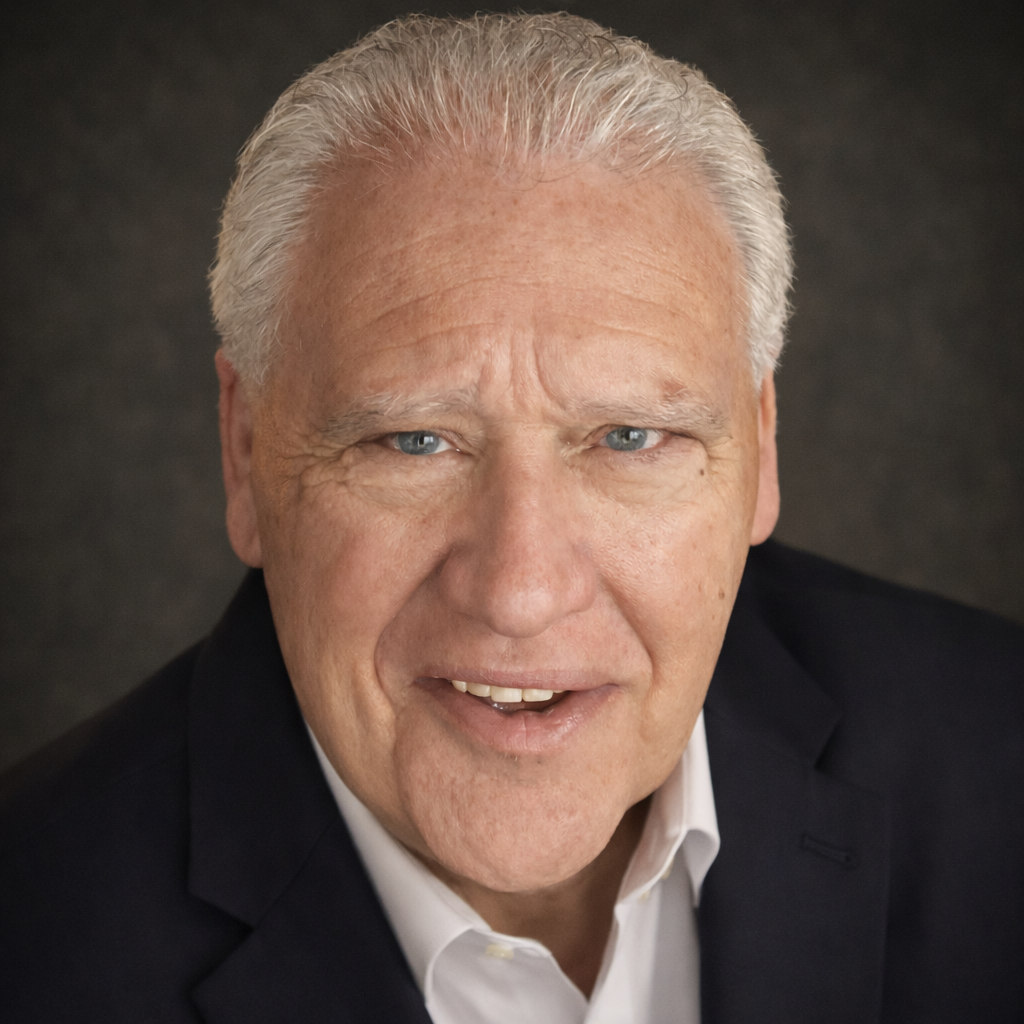
Steve Griffin, Founder of the Compass Institute

The Founder

Why This Exists

"There is a particular kind of exhaustion that belongs only to people who are very good at building things."

It is not the exhaustion of failure. It is the exhaustion that arrives after success — when you have done what you set out to do, stood where you wanted to stand, built what you said you would build, and discovered that the view from there does not quiet what drove you to climb in the first place. The hunger returns. The need for the next validation reasserts itself. The ambition finds a new object. And somewhere beneath the achievement, a question begins to form that no acquisition, no closing, no company sale can answer.

That question is the reason the Compass Institute exists.

Steve Griffin has founded six companies across multiple industries, raised over $225 million in capital, and completed two acquisitions — one to Baxter Healthcare, one to 3M. But the education that shaped the Compass Institute was not the education of the boardroom. It was the education that happens when you are honest enough to look at what drove you into the boardroom in the first place — and what it cost.

What he found, looking back across decades of building, was a pattern he could not unsee. Not a pattern in markets or industries or leadership styles, but a pattern in people — including himself. Beneath every significant success and every significant failure, the same three forces were operating: the hunger for more (Appetite), the need to be seen and valued (Approval), and the drive to achieve, dominate, and ascend (Ambition). He had watched these forces build companies and collapse them. Attract extraordinary people and exhaust them. Fund vision and corrupt it. He had watched them operate in boardrooms, in families, in congregations, in nations — and he had watched them operate, with particular clarity, in his own interior life.

What he did not find — not in the business literature, not in the personality frameworks, not in the leadership methodologies — was a formation instrument precise enough to actually measure them. That absence is what became AlignIQ. The question of what governs the drivers is what became the Sixteen Settled Truths. And the conviction that formation is the work of every institution that touches human life is what became the Compass Institute.


He lives in Franklin, Tennessee with his wife, who teaches elementary school and whose daily proximity to children still being formed has been, he says, one of the most clarifying mirrors of his adult life. He is a grandfather. He writes on Substack. He is the Managing Partner of CML Capital. He chairs the School of Business at Williamson College. He is the author of The Art of Living Aligned, The Theology of Enterprise, Coherent Capitalism, Moral Gravity, and several other books that are, in different ways, all working on the same question.

He built the Compass Institute because he believes the formation crisis is the root crisis. And because he has spent enough time in enough boardrooms, classrooms, congregations, and conversations to know that the people most urgently in need of formation are often the ones most convinced they have already arrived.

He knows, because he was one of them.

"Changing the character of the world —
one person at a time."

The Compass Institute for Enterprise Formation and Authentic Leadership

The world needs
what Compass
was built to do.

Whether you lead an institution, build an enterprise, raise a family, or carry a voice in your community — the formation work is yours to do. Compass exists to help you do it.

Thank you — your message has been sent.